Garden Maintenance Penge — Recycling and Sustainability
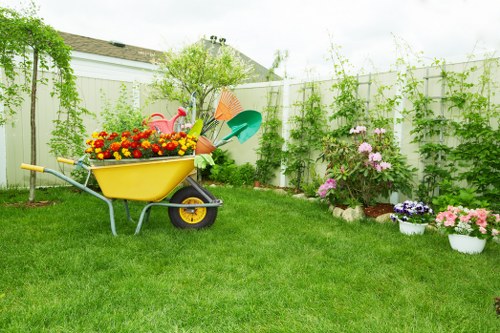 Garden Maintenance Penge is committed to creating an eco-friendly waste disposal area and a sustainable rubbish gardening area for homes and community green spaces across Penge. Our approach combines practical on-site segregation with local partnerships to make sure garden waste, soils and wood are diverted from landfill. We set a clear recycling percentage target to drive continuous improvement, and we use low-carbon vans to keep our operational emissions low while serving the local area.
Our sustainability programme focuses on reducing waste at source, increasing reuse and maximising composting. We train our teams to separate material streams during routine garden maintenance, separating green waste, woody branches, turf and inert materials so that each can be routed to the correct processing facility. Efficiency in sorting means cleaner outputs for composting and recycling, higher reuse rates for timber and less contamination overall.
 The borough-level approach to waste separation informs much of our practice: residents and contractors here follow systems for food waste, garden organics and dry recyclables. We align with those expectations by providing clear on-site bins and using colour-coded sacks or containers where appropriate, helping the London Borough approach to circular gardening work in practice. Our goal is to make local recycling straightforward and visibly effective for homeowners and community groups.
Our Recycling Percentage Target and How We Measure Progress
We have set a measurable target of achieving at least a 65% recycling rate for garden-related material within the next five years, with interim milestones to review performance annually. This percentage covers diverted green waste, chippings for mulch, reusable timber, and soil reuse where possible. To reach this, we track tonnage at collection and transfer, contamination rates, and the percentage that is returned to productive uses such as compost supply and mulch production.
 Performance reporting is transparent; we collect data from every job and reconcile it with receipts from our local processing partners. Strong record-keeping helps us identify hotspots where contamination is higher or where materials are being sent to mixed waste streams, allowing targeted training or changes to routing. We celebrate milestones and adjust our operations to keep improving the borough-wide recovery of organic and construction-related garden materials.
Key recycling activities we manage locally include chipper runs that convert branches to woodchip for paths and beds, composting of lawn and hedge trimmings, and segregation of brick, paving and soil for reuse. We also recover metals and plastics used in planting systems when practical, ensuring a full circular approach to gardening waste in Penge and neighbouring suburbs.
Local Transfer Stations and Responsible Processing
We work with a network of nearby transfer stations and specialist processors to ensure materials go to the best possible facility for recycling or reuse. Typical destinations include green waste composting sites, wood recycling centres and inert recovery yards that accept clean soils and hardcore. Our list of commonly used facilities includes:
- Local green waste composting sites that turn hedge clippings and grass into soil improvers
- Wood recycling centres for logs, branches and untreated timber
- Transfer stations handling segregated construction and demolition arisings from landscaping projects
Working with these transfer points reduces transport distances and ensures a higher-quality end product. We minimise double-handling by delivering separated loads directly where they are needed, which also supports the borough’s objectives for reduced kerbside contamination and better material recovery rates.
Partnerships with Charities and Community Reuse
 Collaboration with local charities and community groups is an important part of our sustainability plan. Where items such as planters, raised beds or reusable pots are in good condition, we redirect them to community gardens, charity reuse shops or social enterprise projects. These partnerships not only extend the life of materials but also support local initiatives that improve green space access and biodiversity.
We maintain formal lines of communication with several charities and civic organisations for the distribution of useful reclaimed materials. This reduces disposal costs and helps social projects obtain resources without new procurement. Reuse is treated as the highest priority in the waste hierarchy, followed by recycling and then energy recovery.
 For larger landscape projects we also liaise with community compost hubs and allotment associations so that surplus compost and woodchip are put back into local food-growing schemes. These circular flows keep nutrients in the neighbourhood and reduce the embodied carbon associated with importing soil improvers from further afield.
Low-Carbon Fleet and Sustainable Practices
Our fleet includes low-carbon vans and smaller electric vehicles used for short runs and tool transport. By prioritising electric or hybrid vehicles for routine jobs we lower tailpipe emissions and noise, which is particularly valuable in residential streets in Penge. We schedule collections and deliveries to minimise mileage, and use route optimisation to reduce the carbon intensity of our maintenance rounds.
Beyond vehicles, sustainable operational choices include using battery-powered machinery, refillable containers for fertilisers and pesticides where appropriate, and preferring locally sourced compost and mulch. Together these measures create a practical, measurable reduction in the carbon footprint of garden care without compromising the quality of work.
In summary, our approach to garden maintenance in Penge is built on measurable recycling targets, responsible local processing, active reuse partnerships and a low-carbon fleet. By aligning with the borough’s waste separation systems and prioritising reuse and composting, we create greener, cleaner public and private gardens while advancing long-term sustainability goals for the area.